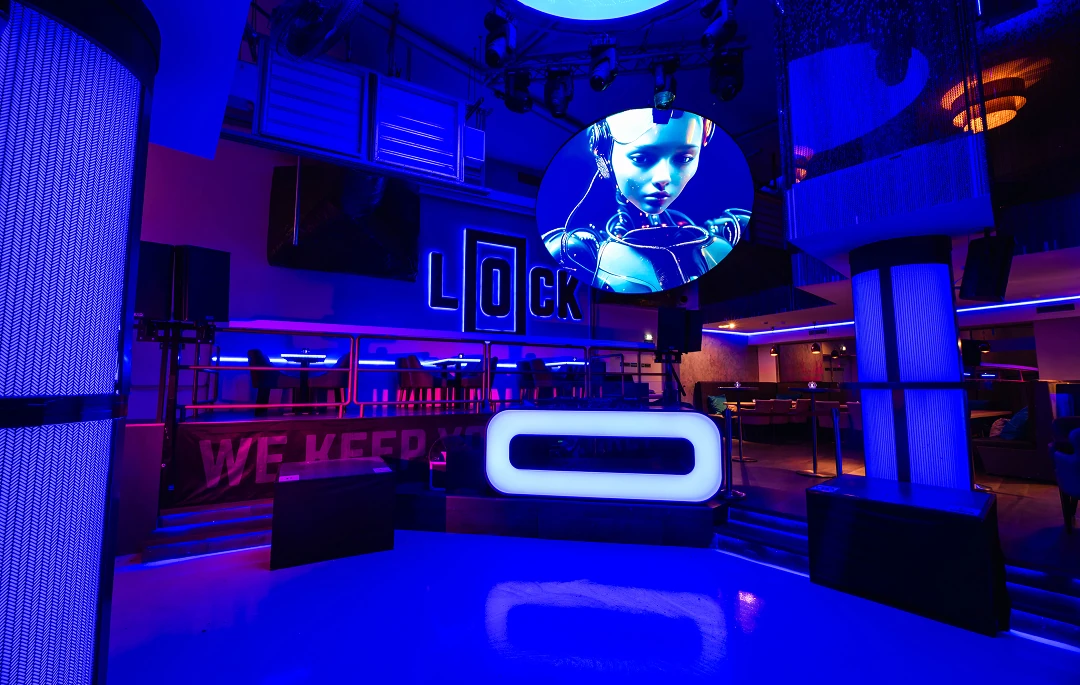
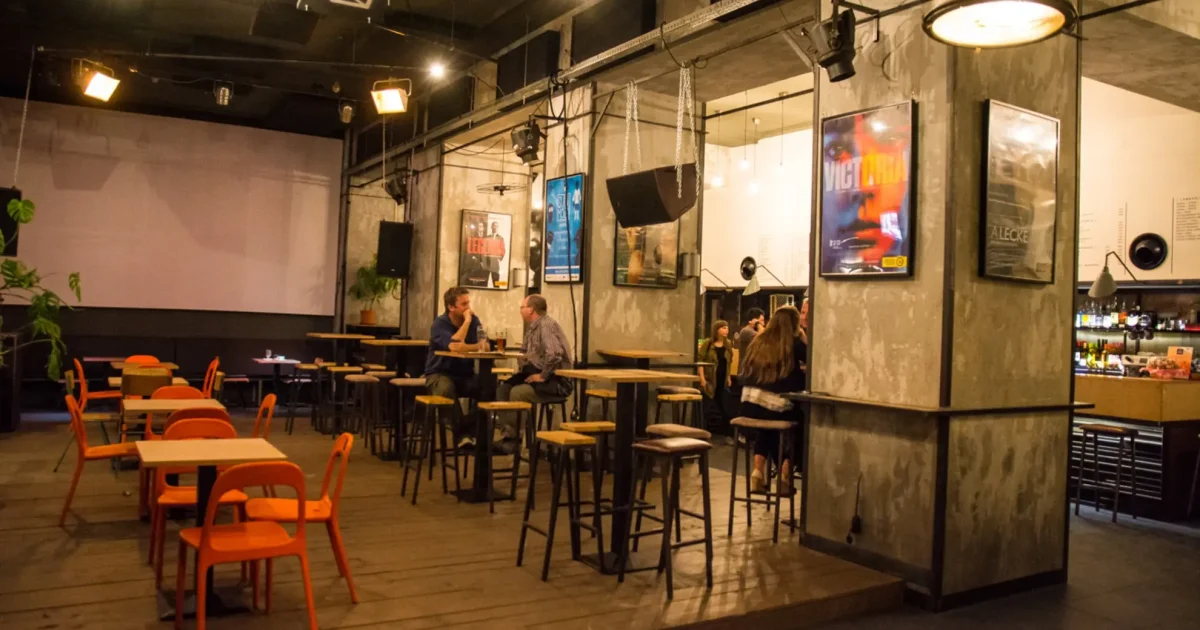
The Toldi Club is one of the most mysterious and controversial venues in Budapest’s nightlife. At first glance, it’s hard to decide what exactly it is: a cinema? A club? A bar? An art space? And the answer – while avoiding categorization – is precisely what makes it so valid: Toldi is always a little different from what you would expect. Those who come exclusively for the concert experience may be surprised, because at Toldi, music is not the goal, but the medium. The night itself is the fabric, and music is just one strong, but not dominant, thread in it.
The Toldi experience pulls the familiar club logic out from under our feet from the very first moment. Upon entering, we don’t arrive in a dark, pulsating, black-painted „music temple,” but in an almost gallery-like, exceptionally bright, spacious foyer where you can chat, sip drinks, and wait. This is not a place where the speakers immediately „hit you” – here, the evening builds, intensifies, breathes. And today, in the culture of club slicing, this is a rare and important gesture.
The concert hall – or rather dance floor – is medium-sized, but often feels even smaller visually. At Toldi, it is not proportions that dominate, but disproportion: the stage is low, the DJ does not rise high above the crowd, and there is no physical or status difference between the audience and the performers. This horizontal spatial structure is a conscious decision – the evening is held together not by hierarchy, but by collective presence. Those who play music are not gods, but participants.
The musical offering? It’s hard to define. Toldi is one of those places in Budapest where the curatorial approach is truly palpable. Here, there are not just „performances,” but evenings, atmospheres, thoughts. Techno here is not just a beat, but a spatial experience. Electronics are not background music, but a formal experiment. At Toldi, we often hear performers who would not dare to be invited elsewhere – because they are too experimental, too slow, too abstract. But here, this is not a disadvantage, but an identity.
All this, of course, requires something from the audience as well: attention, presence, openness. The audience at Toldi is not a nodding crowd, but a subtly pulsating milieu where everyone knows what is happening. There are no accidents here. You don’t just drop in, you arrive. The audience is self-aware, selective, but not arrogant. Rather, it is curious. And it is this curiosity that forms the core of the evenings.
At the same time, it is impossible not to notice the exclusivity of Toldi. Because as special as it is, it is also very stratified. This is not a place where all social strata of the city meet. Toldi is a club for the urban intelligentsia. Hipsters, artists, creative industry players, designers, and the inner circles of the cultural milieu. This is not a criticism—it is a fact. The barrier to entry is not money—it is the code. And those who do not know it remain a little alienated.