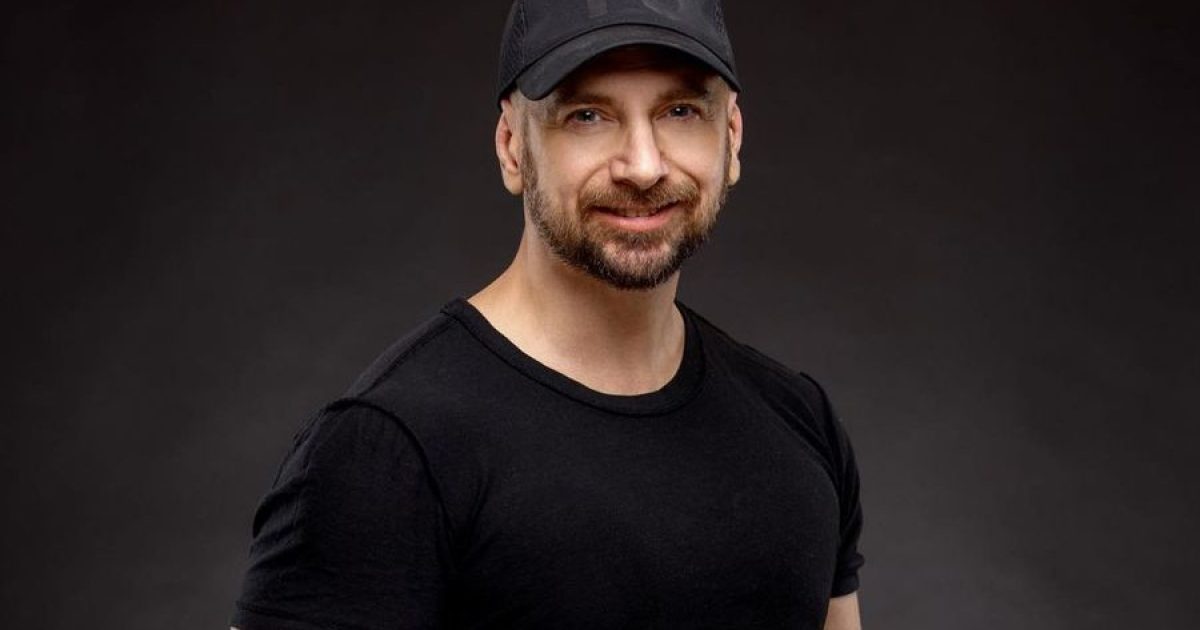
There are names that represent more than DJs — they represent eras. When you say them out loud, you do not think of one specific party, but of a feeling, a chapter of life, a particular time and place. Sterbinszky is exactly that kind of name. He was not merely present during the evolution of Hungary’s electronic music scene — he helped shape it.
A Sterbinszky night carries a different weight from the moment you arrive. There is anticipation. There is respect. And there is that rare sense of reassurance: we are in good hands. You do not worry about the night falling apart or burning out too early. You know there will be structure. A beginning, a middle, a sense of gravity — and a momentum that does not try too hard to appear young, yet feels fresh throughout.
Sterbinszky’s sound builds a bridge between past and present. You can hear the classic mindset of electronic music in his sets, but never trapped in nostalgia. It is more like listening to an experienced storyteller who knows exactly when to revisit a familiar motif and when to move forward. Trance, house, electronic textures — each element finds its place, not for show, but to keep the dance floor moving as one. The question is never, “Do I know this track?” but rather, “Why does this feel so good?”
One of the greatest strengths of a Sterbinszky event is the diversity of the crowd. It is rare in Budapest to see multiple generations truly sharing the same space — not simply standing next to each other, but moving together. There are those who were attending his parties twenty years ago, and those discovering him for the first time. And it works. Because the music does not exclude — it connects. It does not chase trends; it stays honest. And today, that honesty is far more powerful than any loud novelty.
What truly sets Sterbinszky apart is control. He does not rush, does not overcompensate, does not manufacture a peak every few minutes. He understands that a great party is not continuous ecstasy, but rhythm and movement. He builds, he eases back, he allows space to breathe, then drives the energy forward again. As a result, the nights do not exhaust you — they carry you. They do not drain you — they recharge you. This is the kind of party you do not escape from at dawn, but regret when it ends.
At a Sterbinszky event, dancing is not a pose — it is instinctive. There is nothing to prove, nothing to exaggerate. You simply let the music take you. And when you look around, you see that everyone else is doing the same. That is what creates the rare, shared energy that cannot be forced — only cultivated. And Sterbinszky knows exactly how to cultivate it.
If you are looking for a night in Budapest that does not try desperately to be trendy, yet remains timeless; that is not loud, but powerful; not intrusive, yet unforgettable — then a Sterbinszky event is essential. These are the nights after which you do not just say, “That was good,” but also understand why you love this culture in the first place.
This is not nostalgia.
It is continuity.
And as long as that continuity exists, Hungarian nightlife remains in steady hands.